
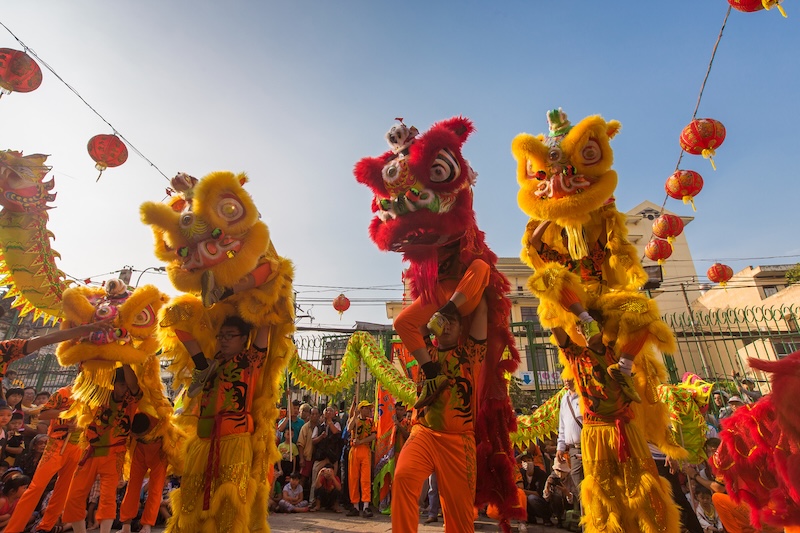
Lunar New Year 2026 begins on February 17, 2026, and ushers in the Year of the Horse. Traditionally, this holiday was referred to in the United States as Chinese New Year, reflecting the heritage of early Chinese immigrant communities. Today, many of the traditions remain, but the way we talk about and observe the holiday has taken on a new, more modern, and inclusive twist.
Increasingly, the term “Lunar New Year” is preferred in the United States, recognizing that many Asian cultures and communities celebrate the new year using the lunar calendar. These countries include China, South Korea (Seollal), Vietnam (Tết), Singapore, Malaysia, Taiwan, Indonesia and Thailand.
Food at the Heart of the Celebration
Traditional celebratory food, thankfully and of course, remains central.
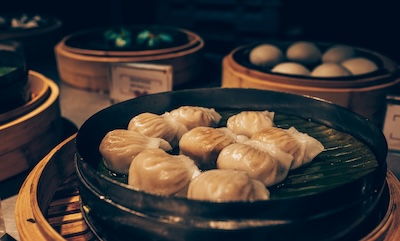 In Chinese culture, dumplings, shaped like ancient gold ingots, symbolize prosperity and good fortune. In my mother’s kitchen, dumplings always made a much-anticipated appearance. The filling was chopped entirely by hand on a wooden board with a large cleaver. Meat was cut first into small pieces, then chopped finer and finer as other ingredients were added. The rhythmic sound went on for a long time, producing a perfectly textured filling and a very tired hand.
The dumplings were carefully shaped, then pan-fried and steamed. Reminiscent of gold ingots, they symbolized wealth and good fortune. They were served with a simple dipping sauce of soy and vinegar. I’ve included my mother’s recipe below, updated with use of a food processor. Honestly though, today you can find frozen dumplings at Costco or Trader Joe’s that come almost close to my mom’s.
Korean and Vietnamese Traditional New Year Foods
In Korea, Lunar New Year (Seollal) is marked by tteokguk, a rice cake soup eaten on New Year’s morning. Eaten, it symbolizes gaining a year of age, renewal and good fortune. The soup features thinly sliced garaetteok (long, cylindrical Korean rice cake made from steamed short-grain rice flour), a clear beef or anchovy broth, and garnishes such as shredded beef, egg omelet strips, scallions, and seaweed. The white rice cakes represent purity and a fresh start. A recipe from my second son’s girlfriend‘s brother’s Korean wife (obviously a close relationship by Chinese standards!) runs 3 pages with made from scratch garaetteok and broth. Modern takes on the recipe find the garaetteok in Asian groceries and use ready-made broth.
Vietnamese Americans celebrate Tết with Bánh Chưng (square, in the north) or Bánh Tét (log-shaped in the south). These sticky rice cakes, filled with mung beans and pork and wrapped in banana leaves, are served at family gatherings, placed on ancestor altars, and shared with friends and neighbors. Time consuming to prepare, they require 8–10 hours of boiling, though modern pressure cookers reduce that to 2½–3 hours. Saving time, today many families purchase them from Vietnamese bakeries, Asian markets, or community fundraisers.
A common thread across all these dishes is umami, the savory depth of flavor created by glutamates that occur naturally in all protein-containing foods, and are especially high in fermented foods. Another shared feature is the comfortable use of MSG in so many Asian recipes. Glutamate is a naturally occurring amino acid and a key flavor enhancer. MSG is simply the sodium salt of glutamic acid, and our bodies process it the same way they process glutamate found in food. Ingredients common in Lunar New Year dishes such as fish sauce, soy sauce, and seaweed contain the same glutamate found in MSG and contribute the same rich umami flavor. Glutamate-rich foods and MSG have been widely used across Asia for generations.
So, Happy Lunar New Year 2026…or Year 4723 in the Chinese calendar.
May the Year of the Horse bring energy, courage, and forward motion.
See my Grandmother’s Dumpling recipe and others at the end of the post.
An Evolution in a Modern World
In the United States, recognition and celebration of Lunar New Year has expanded significantly. It has become a wonderful opportunity to celebrate with food, fun, and community. Using the term “Lunar New Year” reflects the diversity of the AAPINH (Asian American, Pacific Islander and Native Hawaiian) communities. Schools, museums, cities and companies increasingly use this language to reflect multicultural participation.
Indeed, the holiday has become so widely recognized that several states have taken steps to formally acknowledge it. California was the first U.S. state to recognize Lunar New Year as a state holiday with legislation signed in 2022. Colorado followed, signing legislation in June 2023. New York now recognizes Lunar New Year statewide including closing public schools, and Washington State has passed legislation formally recognizing the holiday, though it is not a paid state holiday. In addition, many municipalities host large annual celebrations, festivals and parades.
Personal Reflections: Growing Up with Chinese New Year
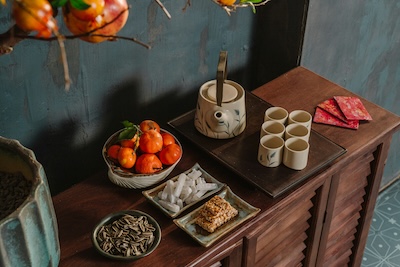 As a child, my sister and I, the children of immigrants from China, celebrated the New Year very traditionally. The celebrations lasted 15 days, beginning on Lunar New Year’s Eve and ending with the Lantern Festival.
Like all children, we eagerly awaited “hongbao,” which are lucky red envelopes stuffed with money and placed into the eager hands of unmarried children. My adult, unmarried son still awaits his hongbao every year, much to the chagrin of his older, married brother!
Food was always a central and meaningful part of the celebration. It was the rare time of year when we were allowed to indulge in candied fruits: coconut, mango, and plums already so sweet, but covered with an additional coating of sugar. And, of course, we always looked up our zodiac horoscopes, curious about what the coming year might hold based on the animal that represented us.
Traditions, but Now with a New Twist
Traditions have evolved in our modern times. In China, hongbao is commonly sent digitally via WeChat – a China-based all-in-one mobile app used for messaging, payments, and everyday services.
In China’s old agricultural-based past, New Year was observed for the full 15 days. In modern China, while the traditional celebration lasts 15 days, the official public holiday is about a week, with the greatest slowdown occurring during the first several days as families travel home and gather, and gradually coming back to business as usual.
In the U.S., Asian communities often schedule celebrations and banquets over a much longer window of time, often beginning a month before and continuing well after the New Year. This is a nod to modern work, school and business schedules.
Banquets themselves have evolved. What were once strictly traditional gatherings are now often community celebrations, inclusive of multiple cultures. It’s not unusual in the U.S. to see multi-ethnic Lunar New Year events, bringing together Chinese, Korean, and Vietnamese communities. I remember originally being astounded to be invited to an OCA-JACL (Organization of Chinese Americans-Japanese American Citizens League) New Year banquet. In Asia these countries would not celebrate together, and Japan observes the New Year on January 1 rather than following the lunar calendar.
Other traditions have altered as well. Practices like deep house cleaning before the new year, and avoiding sweeping on New Year’s Day so as not to sweep good luck out the door, have given way to less superstition and more emphasis on togetherness.
Curiosity about zodiac predictions still remains, however, and those are now embraced more for fun and pop-culture appeal than strict belief.
2026: The Year of the Horse Predictions
Horse years are associated with energy, movement, independence, and momentum. For individuals, 2026 favors bold decisions, personal freedom and adaptability. It is not a year for the status quo or stagnation. Opportunity comes to those willing to act with courage.
On a broader societal level, expect fast-moving change and leadership shifts.
 Individual Zodiac Predictions for 2026
- Rat: Rebuild strategy; avoid rushing
- Ox: Steady progress; focus on health
- Tiger: Strong year; leadership rewarded
- Rabbit: Relationships improve; stay flexible
- Dragon: Big ideas; manage stress
- Snake: Transition year; prepare quietly
- Horse: Your year; bold wins, but avoid burnout
- Goat: Creative growth; emotional balance
- Monkey: Innovation pays off
- Rooster: Recognition at work
- Dog: Stability; deepen commitments
- Pig: Financial caution; personal joy
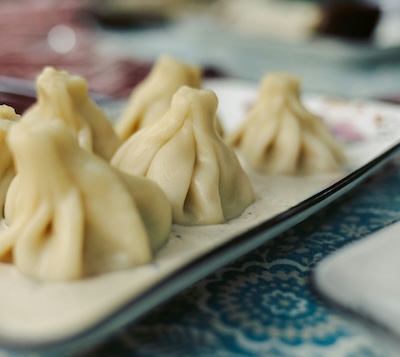
Grandma Chin’s Cantonese Dumplings
In Chinese culture, dumplings, shaped like ancient gold ingots, symbolize prosperity and good fortune.
Ingredients
- 1 pound raw pork shoulder in pieces
- ¾ pound raw shrimp after shelling and deveining
- ½ cup bamboo shoots rough chopped
- ½ cup water chestnuts rough chopped
- 1/3 cup green onions green and white parts, rough chopped
- 6 black Chinese mushrooms* rehydrated, stems removed and rough chopped
- 2 Tbsp soy sauce
- 2 tsp cornstarch
- 2 Tbsp sherry or Chinese cooking wine
- 1 tsp sugar
- ½ tsp salt
- ¼ cup chicken broth
- ½ tsp MSG Yes, my mom used MSG!
- 2 tsp sesame oil
- 40 round wonton skins
Instructions
-
Traditional method: Grandma always chopped everything together by hand using a meat cleaver. First chop the pork pieces. Then chop in the shrimp. Add the bamboo shoots, water chestnuts, green onions and mushrooms, chopping them in together. Chop only until mixed. The filling should be finely chopped but not a puree.
-
Modern method: Place the pork in a food processor and pulse briefly. Add the shrimp and pulse briefly again. Add the bamboo shoots, water chestnuts, green onions, and mushrooms and pulse just until mixed. Remove from the bowl immediately to avoid over processing.
-
Seasoning: Combine soy sauce, cornstarch, sherry, sugar, salt, chicken broth and sesame oil. Stir seasoning mixture into the chopped meat until just combined.
-
To Fill: Place 1 tablespoon filling in the center of a wonton or dumpling wrapper, moisten the edges with a little water, fold and seal.
Cooking methods
Pan fry and steam (most common)
-
Heat 1 tbsp oil in a skillet over medium heat.
-
Arrange dumplings flat side down.
-
Cook until bottoms are golden.
-
Add 1/4 cup water, cover, and steam 5 to 7 minutes.
-
Uncover and cook until water evaporates and bottoms crisp again.
Boil
-
Drop dumplings into boiling water.
-
When they float, cook 1 to 2 more minutes.
-
Remove and drain.
Steam
-
Line steamer with cabbage leaves.
-
Steam dumplings 8 to 10 minutes.
To Serve
-
Serve hot with dipping sauce. Traditionally eaten at New Year for prosperity, as their shape resembles gold ingots.
Recipe Notes
*To rehydrate Chinese mushrooms, place in a deep bowl, and pour boiling water to cover. Will take at least 20-30 minutes.
Photo by Nikita Pishchugin on Unsplash

Korean-Style Meat Marinade
The longer the marinade time, the better, says the original recipe author!
Ingredients
- 1 cup soy sauce
- 1 cup water
- ½ cup honey
- ½ cup chopped green onions
- 1 Tbsp. sesame oil or other oil
- 1 tsp. black pepper
- ½ Tbsp. MSG
- 1 tsp. garlic powder or less to taste
Instructions
-
If using a beef roast, slice paper-thin.
-
Pour marinade over the slices, cover and allow it to marinade overnight in the refrigerator.
-
For chicken, pork, ribs, or shrimp, add the marinade then cover and refrigerate for up to 24 hours in the refrigerator. Meats can then be cooked on a grill, baked, broiled or stir-fried.
Recipe Notes
Recipe courtesy of Recipes.fandom.com
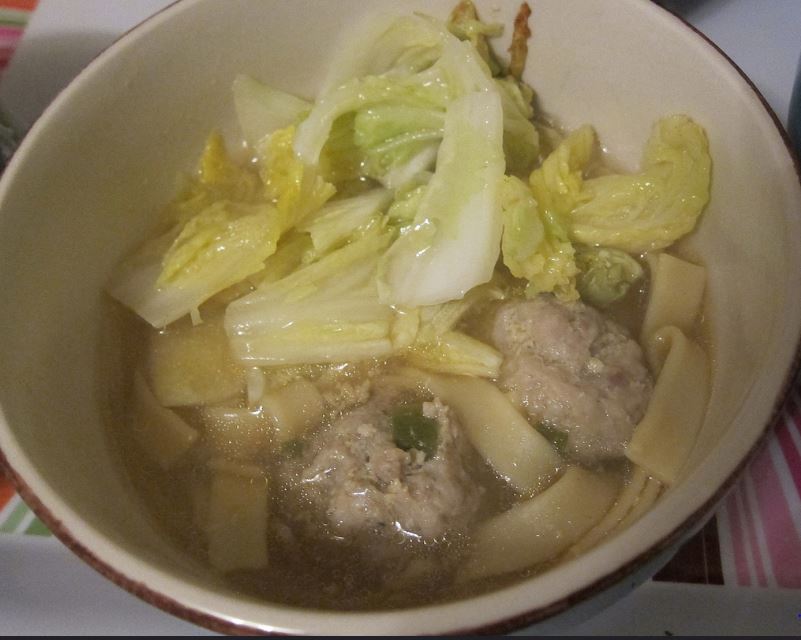
Chinese Lion’s Head Soup
Ingredients
- 1 lb. ground pork
- 1 egg
- 1 Tbsp. cornstarch
- 2 tsp. sesame oil
- 1 Tbsp. fresh ginger root minced
- 1/4 tsp. monosodium glutamate MSG
- 1 tsp. salt
- 2 green onions chopped and divided
- 1 Tbsp. vegetable oil
- 1 head Napa cabbage cored and cut into chunks
- 2 cups low-sodium chicken broth
- 2 cups water or as needed
- 1 Tbsp. soy sauce
- 2 tsp. sesame oil
Instructions
-
Mix the ground pork, egg, cornstarch, 2 teaspoons of sesame oil, ginger, MSG, salt, and half of the chopped green onions together in a bowl. Use your hands to mix until the ingredients are evenly distributed. Set aside.
-
Heat the vegetable oil in a wok or large skillet over high heat. When the oil is hot, fry the Napa cabbage, stirring constantly, until cabbage begins to wilt, 2 to 3 minutes. Pour in the chicken broth, water, and soy sauce. Bring to a boil, then lower the heat to medium.
-
Use a spoon to form the meat mixture into 1 inch balls. Drop them into the boiling soup. When the last ball has been added, cover with a lid and simmer for 10 minutes. Taste, and adjust salt before serving. Garnish with remaining green onions and a drizzle of sesame oil.
-
Optional: This dish is best served with white sticky rice.
Recipe Notes
Recipe courtesy of AllRecipes.com
Dumpling Photo by SJ 📸 on Unsplash.
Table with Food Photo by HyggeLab Concept on Unsplash.
Zodiac Lanterns Photo by Adrian Siaril on Unsplash.

